Comments
Note: Researching and writing this took far longer than I’d anticipated, which meant less rigor in my analyses and less feedback on drafts than I’d hoped for. As such, please feel especially welcome to point out corrections in the comments and I’ll do my best to engage and/or update the post accordingly. A huge thank you to David Schrank of TTI who met with me as I drafted this piece, and to Ben Schifman and Betzalel Newman for giving an early draft of this a quick read! All mistakes are my own.
Summary
- Importance: Traffic congestion plausibly imposes as much as $100-200 billion of harm annually in the US alone, in the form of wasted time, fuel, and associated greenhouse gas emissions
- Neglectedness: There are no philanthropic actors I could identify that are working to mitigate traffic congestion. There are (governmental) Departments of Transportation that - to varying degrees - seek to mitigate traffic congestion, but the toolkits they use are relatively narrow, focused on “supply-oriented” interventions such as expanding highways
- Tractability: There is not a tremendous amount of research on interventions in this space, and that is especially true of “paradigm-shifting” interventions that might reach Open Philanthropy’s ~1,000x bar, which makes determining tractability and ROI challenging. That said:
- The lack of research on interventions means that funding further research might itself be a worthwhile intervention by a philanthropic funder
- COVID has proven something of a “natural experiment” in the widespread adoption of work from home policies, which seems to have been a key force in reducing congestion by as much as 25-65%.
- Efforts to maintain some of this reduction moving forward could plausibly achieve 1,000x returns, as could encouraging the expedited adoption of self-driving cars, which I explore at a high level below
Introduction
For those of us who live in and around urban areas, one widely accepted and deeply loathed feature of daily life is the presence of significant automotive traffic. Whether a Monday morning commute to the office or a Friday afternoon exodus to the beach, (sub-)urbanites can and should expect a portion of their trip will be spent creeping along at a snail’s pace.
Like all aspiring effective altruists, I distinctly remember my first societal cost-benefit analysis. Circa middle school (~2005), I was in my mother’s minivan while she drove down the Capital Beltway (our gridlock extends beyond the halls of Congress). We were meandering along at 1/6th the speed limit until - suddenly - the results of a fender bender came into view. As we passed, the speed of traffic climbed back to an appropriate highway pace. In that moment I thought to myself - motivated purely by charitable impulse, I assure you - “they should have a tractor come, crush the offending cars, and shove them onto the grass. Even if we had to pay for the damaged cars it’d be better for all of us.”[1]
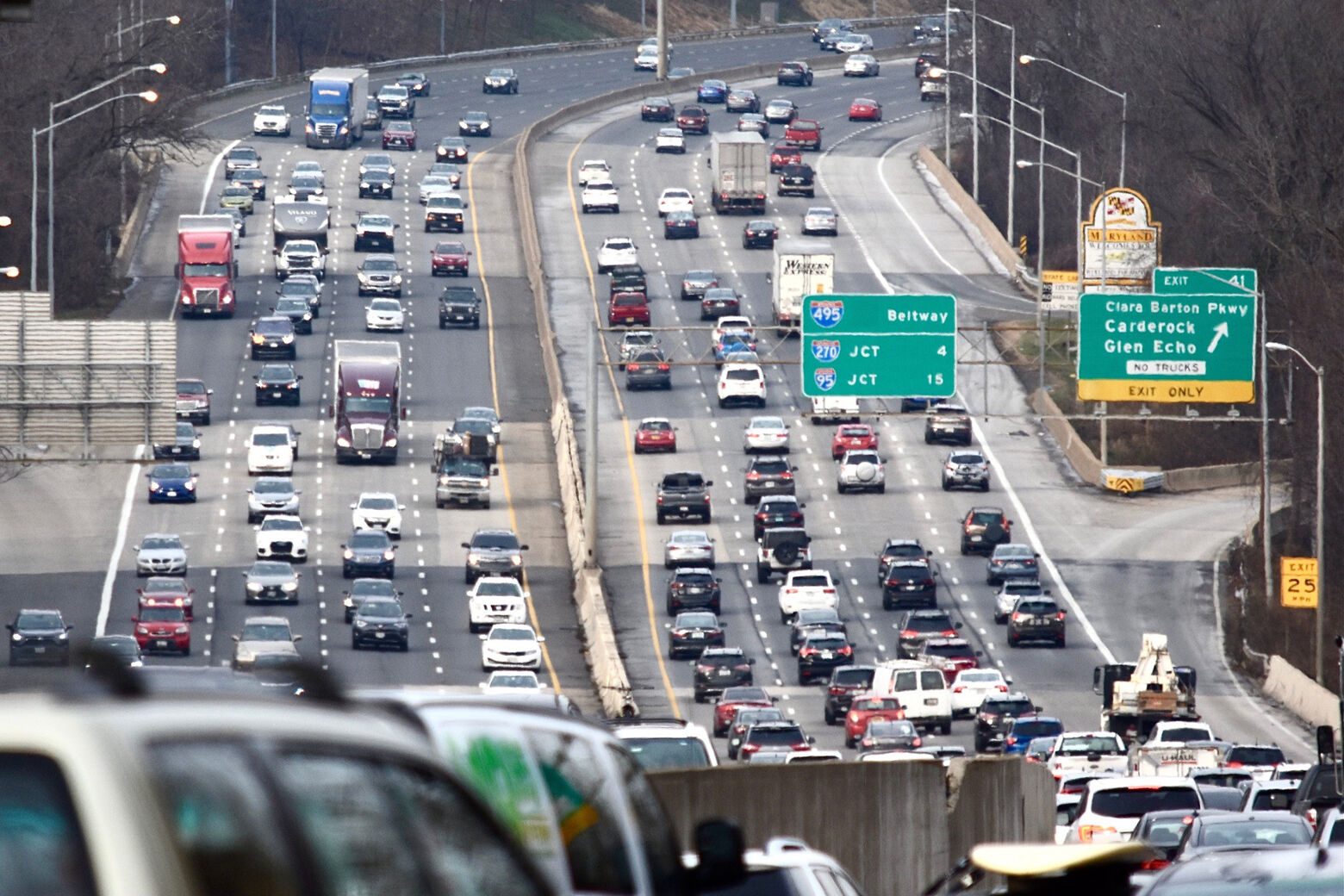
As it turns out, the average American commuter is delayed 50+ hours/year due to traffic. And this may just scratch the surface of the negative consequences of traffic congestion, which include:
- Wasted time in traffic (those ~50 hours)
- Excess time sub-optimally allocated to travel due to uncertainty about traffic (e.g., building in an extra 15 minutes to be sure you don’t miss the performance / appointment / meeting)
- Wasted fuel (cost)
- Increased harmful emissions from excess fuel consumed
- Increased costs of goods delivered via freight (commercial trucks)
- Elevated stress levels and fatigue among commuters
- Reduced effective lifespans of vehicles and their consumable parts
- Narrower pools of job opportunities workers may consider, due to limited willingness to commute
- Increased attractiveness of short-haul flights, which create far more harmful emissions than driving
- Etc.
But adding these all up, just how important a problem is traffic (I know, I know, you already saw the answer in the summary)? Is it something we can address (and who is already trying)? And is there any chance whatsoever my personal pet peeve here in the wealthier (urban) areas of the US could plausibly compete for Open Philanthropy’s attention and resources? I was unsure, but determined to put in the effort to research these questions and share my findings, independent of outcome. For the greater good. And my 12-year-old self. In equal measure.
Importance
Time wasted
As mentioned, the average US commuter loses ~50 hours/year due to traffic.[2] This no doubt reflects many family dinners missed and abbreviated nights of sleep, but more concretely - how much is 50 hours of commuters’ time worth? Thankfully there is a large literature on the topic of the value of (commuter) time, and - though I went down more rabbit holes than I care to admit - views seem to coalesce at about $20/hour[3] on the low end.
Across ~133M commuters,[4] this then represents ~6.7 billion hours[5] wasted at an implied cost of ~$133B annually. To put those numbers into context:
- Average US life expectancy is ~670 thousand hours (77 years), so the time wasted is comparable to ~10,000 lives “spent” or lost each year sitting in traffic
- $133B is equivalent to 2 times President Biden’s FY 2023 budget request for the Department of State and USAID, with room left over for the the budget of the National Science Foundation[6]
But in addition to excess travel time due to speeds at below-free-flow rates, there’s the aforementioned time that commuters spend sub-optimally due to uncertainty about congestion (the “I can’t be late to the airport” tax, if you will). This time has been described as the “Value of Reliability,” and seems to be roughly equivalent to the Value of Time[7] (again, I’m assuming ~$20/hour here). Unfortunately I didn’t come across any estimates of how much time is “spent” in this manner, nor did I find time to do my own back-of-the-envelope estimate,[8] so I’ll simply acknowledge it as another potentially meaningful negative knock-on effect of congestion.
Wasted fuel (cost)
Maintaining steady highway speeds is beneficial for fuel consumption because:
- Fuel economy in most vehicles peaks at ~50MPH
- Rapid acceleration and braking wastes fuel[9]
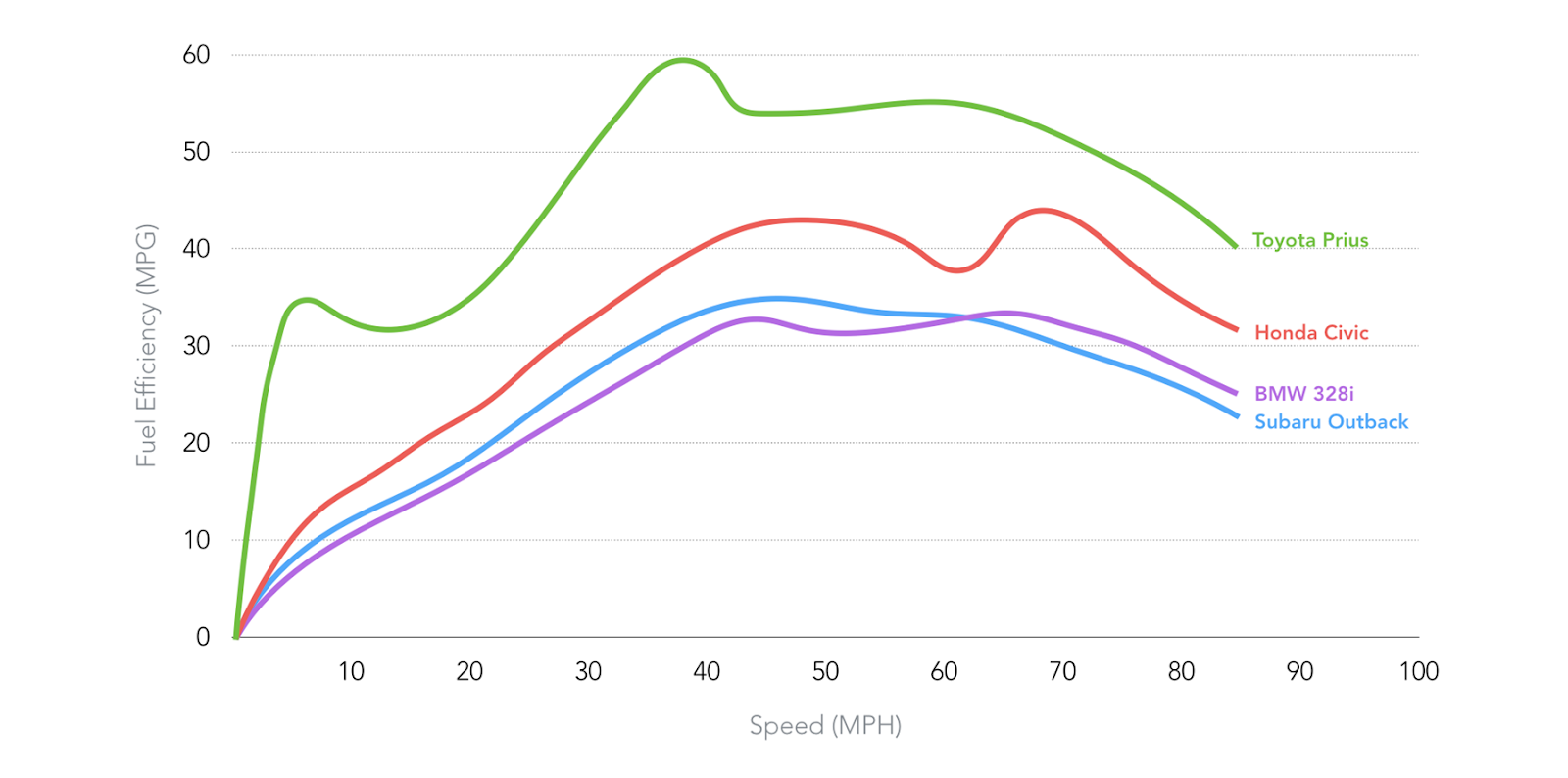
Because congestion reduces the pace of traffic and contributes to stop/start behavior (especially among eager commuters), it caused ~3.3 billion gallons of fuel to be “wasted” annually in the years leading up to COVID.[11] In dollar terms, this represents an incremental cost of almost $9B[12] (or nearly $14B at today’s fuel prices[13]).
Emissions
TTI calculates that this wasted fuel caused by traffic congestion corresponds to an incremental 34.3 million tons of CO2 emissions, or ~5% of total automotive emissions.[14] They don’t provide an estimate for other pollutants, but based on the fuel consumed, nitrous oxides would contribute another ~0.2 million tons of “CO2e” (carbon dioxide equivalent).[15]
The cost of removing CO2 from the atmosphere seems to be… heavily debated? For removal from the atmosphere costs seem to be in the range of ~$600/ton, which would imply a total annual cost of over $20B to remove the excess emissions caused by congestion. However, highly effective abatement might be as cheap as $1/ton, in which case equivalent reduction would be a rounding error in the overall scale of this issue area.
Truck congestion cost
TTI estimates what they call a “truck congestion cost” of ~$19B/year due to both delays and wasted fuel. Approximately 9% of this cost is in the form of wasted fuel which was already captured in the total “wasted fuel” above. The remaining ~$17B/yr represents incremental wasted or lost trucker time.
Putting it all together
To summarize, traffic congestion in the US imposes annual costs of:
- Wasted passenger vehicle time: $133B+
- Wasted fuel: $9B
- Emissions: Nominal to $20B
- Wasted trucker time: $17B
In total, then, traffic congestion imposes costs of $159B+ in the US each year, and that just from the “easily” quantified costs.
Potential benefits of congestion
While the harms of congestion are in many ways readily evident, it bears reflecting on whether there are any benefits to congestion that could (even partially) offset these costs. Although this isn’t something I saw explicitly covered in discussions of congestion, two plausible countervailing effects of congestion that come to mind are:
- Reduced fatalities in traffic accidents
- Simply put, accidents have higher fatality rates at higher speeds[16]
- However, incidents that lead to fatalities at high speeds are likely partially associated with congestion (e.g., sudden slow-downs, lane closures, not to mention the density / quantity of vehicles on roads) so I’m at least unsure whether reducing congestion would increase fatalities by way of increasing speeds[17]
- Reduced interest in driving
- There’s a concept in economics of “induced demand” whereby increasing supply of a good drives a decrease in price and thereby increases demand
- This is especially pronounced in the case of traffic where expanding a highway (increasing supply) simply attracts more drivers (heightened demand), because it’s generally free to travel on roads
- So too, when commuters bear higher costs due to increased congestion, they’re more likely to forgo an optional trip, choose to commute at an off-hour (reducing peak flows), or utilize an alternate means of transport such as biking, public transit, or carpooling
- As a result, it’s possible that reducing congestion is an almost-Sisyphean task, and at the very least this makes clear the problem needs to be considered dynamically
- Most importantly, however, this highlights that a focus on “demand-facing” interventions (e.g., congestion pricing) is likely a more fruitful approach to reducing congestion than standard supply-focused efforts (e.g., adding lanes to roads)
- Indeed, one sign that demand-focused interventions can make a meaningful dent in congestion (without complete self-correction) is the aforementioned 25-65% reduction in congestion we’ve seen during COVID, largely due (it would seem) to the adoption of hybrid and work from home policies
I was unable to estimate effect sizes for these benefits, so I'll sheepishly say: between the unquantified harms, the conservative assumptions in my quantified harms (including emission abatement), and the expectation that self-driving cars would yield a reduction in fatalities - I think (but with more time would have liked to confirm!) it's okay to call these a wash.
Neglectedness
Who else operates in this space?
A handful of particularly frustrated commuters aside, the problem of traffic congestion seems to be one that most folks are eager to forget about as quickly and firmly as they shut their car door. That said, there are a number of organizations who do keep a watchful eye on congestion day in and out. These largely fall into two categories: research organizations (e.g., TTI, the National Institute for Congestion Reduction) and governmental Departments of Transportation (everything from the Federal Department of Transportation down to city-specific agencies).[18]
Research organizations are focused on, well, research. Their funding comes largely from governmental Departments of Transportation (DOT), and the expectation is that researchers’ findings will - in turn - inform policy decisions (e.g., how and where to expand highways or coordinate traffic lights). The National Institute for Congestion Reduction (NICR), for example, focuses on knowledge sharing: primarily through the (co-)publication of research but also through conducting local training. NICR’s reports are on topics such as “Comparing Pricing Mechanisms for Managed Lanes” and “Ensuring Equity and Access in Dockless Micromobility Services.” David Schrank of TTI tells me that historically research organizations haven’t done as much in the way of scenario modeling due to limited data, but such analyses are just now becoming possible thanks to new avenues of data collection. Data that once came from sensors embedded in pavement are now available in larger quantities and with much greater fidelity via mobile phones and GPS / in-dash data.
DOTs, on the other hand, actually embark upon concrete (heh) actions. Unsurprisingly, DOT funding of research is a small fraction of what for many state DOTs is an annual budget measured in billions of dollars. Most DOT funds are used to maintain existing and construct new infrastructure (including roadways, bus facilities and fleets, and ports) to ensure people can move around and businesses can convey products efficiently and safely.
The Texas DOT is particularly focused on reducing congestion (they call this effort “Texas Clear Lanes”), and you can see projects they’re funding here. Bigger ticket projects run as much as $4B+, and examples include:
- $1.7B for I-635 LBJ East US 75 to I-30 to expand to a total of 12 total lanes, introduce new continuous frontage roads (i.e., local roads that run parallel to highways), and improve intersections. This interstate is being targeted for investment due to congestion; the road was originally designed to accommodate 180k cars but now averages 230k.
- $1.7B for I-35 in Cooke County to widen the roadway, create new bridges, convert frontage roads all in the name of providing congestion relief
- $731M to build Oak Hill Parkway: an 8-12 lane roadway, overpass, new flyovers and intersections, bike/pedestrian accommodations, and more to address another of the 100 most congested roadways in Texas
Which is to say: the scale of the projects being undertaken to address congestion in Texas is massive, while the interventions being employed are relatively narrow in design (largely new and expanded roads).
Meanwhile, philanthropy in this space is virtually nonexistent. There are a handful of non-profits focused on biking (e.g., Transportation Alternatives, PeopleForBikes) or safety (e.g., the AAA Foundation for Traffic Safety), but the only organization that seems to have an interest in congestion whatsoever is the Intelligent Transportation Society of America, a group focused on improving mobility through technology.
In short, then, I could not identify any non-profit whose mission involved reducing congestion - not even a commuter lobby. And this is to say nothing of philanthropic organizations willing to think outside the box and/or seek out interventions through the lens of optimizing cost-effectiveness. A person or organization dedicated to doing so would then be an entirely new type of player, and would encounter the associated benefits (e.g., availability of low-hanging fruit) and challenges (e.g., building partnerships) that are likely to come with it.
Why are others not pursuing the strategies I think are most promising?
I believe there are three main reasons other actors are not already pursuing the most promising strategies to mitigate congestion:
- Solutions to address congestion have been (and in many ways remain) squarely in the government’s purview
- The interventions that have been used in the past to address congestion are - as noted above - extremely expensive infrastructure projects that philanthropists lack the capital or rights to implement
- In addition, policy ideas such as congestion pricing and vehicle-miles traveled (VMT) fees are ultimately enactments of governments, and can be deeply unpopular with voters
- While lobbying could allow a non-governmental actor to help influence policy decisions, 501(c)(3)s can’t lobby in the US (and see 2c below)
- Mitigating congestion lacks appeal to conventional donors
- In polite society it’s a bit hard to pitch donors on shortening your commute to work when there are more recognizable social ills all around us. Though traffic does not discriminate based on income, the fact remains that it’s primarily able-bodied and employed individuals in large cities who most directly (harmful emissions and higher-priced goods aside) experience the harms of traffic congestion
- The causes of congestion are highly “diffuse” i.e., there’s no clear target toward which blame can be directed
- The harms of congestion are highly diffuse. Absent a group experiencing an unusual and meaningful burden who might be compelled to coordinate and seek redress, it’s hard to imagine how an organization looking to mitigate these harms would end up forming
- It is only recent developments that make some of the most promising strategies possible
- Modern connected devices have unearthed a tremendous amount of traffic data not previously available to researchers
- Employers (private and public) were generally loath to adopt “telework” policies until COVID forced many hands, and the time was right in that laptops had become standard-issue from many employers and so-called “collaboration platforms” such as Zoom and WebEx were viable products
- The implementation of self-driving and “connected vehicles” is still very much in its nascency, and adoption of “congestion pricing” is only recently (haltingly) starting to show signs of potential traction in the US
Tractability and possible interventions
How can a philanthropic funder help to make progress on this problem?
Addressing traffic congestion is something of a “white space” relative to many other cause areas Open Philanthropy might be considering. There are no philanthropic actors in the space to speak of, and research on interventions has been fairly narrowly focused. (Most research today looks to the “supply side” of transit e.g., expanding roads, rather than to demand-oriented interventions looking to reduce “consumption.”) I was unable to find so much as a single randomized control trial (RCT) on the topic, so this isn’t as straightforward as “throw money at the proven cost-effective solutions.”
As such, one immediate way a philanthropic funder could make progress on the problem is by funding research on unusual and newly feasible interventions such as lobbying to encourage the adoption of self-driving cars or a VMT (vehicle miles traveled) fee, leveraging the rich traffic flow data that researchers have only recently had at their disposal.
Alternatively, if a funder were willing to make thoughtful (and not necessarily large) bets and learn retrospectively, it might be possible to “skip” past some research and “do it live,” piloting interventions at a small scale to quickly ascertain the efficacy of these approaches. E.g., an organization could coordinate and fund a local campaign aimed at a city government weighing modifying their laws to ban or incentivize automated vehicles.

Unfortunately I simply didn’t have the time or resources to explore interventions in as much depth as I’d have liked. What I’ve done below is list some of the interventions I’ve encountered and given a very informal estimate as to how they stack up on a range of measures. A funder and/or expert on the topic would, I hope, be able to refine and expand upon this as they explore this issue area.[19][20][21][22][23]
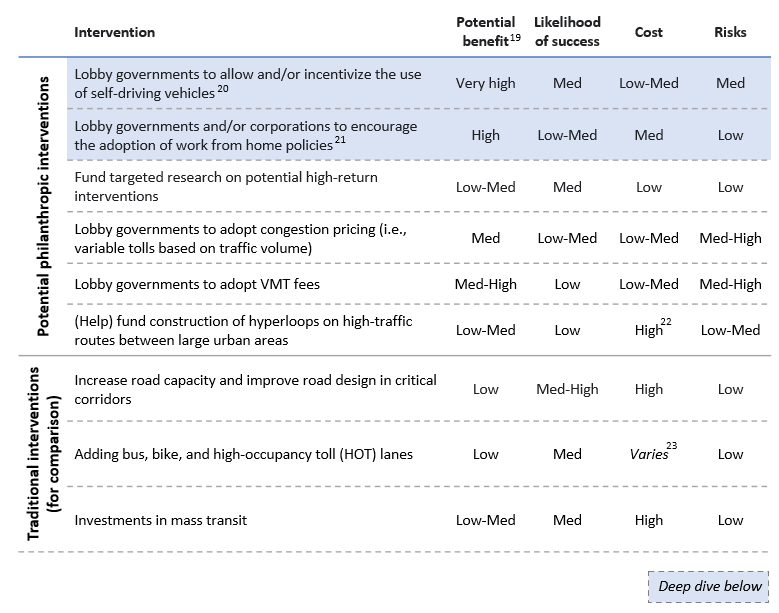
Can you estimate what impact per dollar you would expect for different types of interventions?
In short, not as rigorously as I’d like. The interventions that I believe might have a shot at 1,000x returns involve lobbying governments to adopt policies or behaviors, and researchers haven’t explored potential returns to lobbying on these specific initiatives. Pressed for time, I’ve had to take a rather rough approach to try to get a sense for whether these interventions have a shot at meeting Open Philanthropy’s targeted 1,000x social return. I came at this from two angles: 1) a rough “sanity check” using a back of the envelope (BOTE) estimate of the expected value of these interventions vs. lobbying costs on other issues 2) researchers’ estimates on the ROI from lobbying in other contexts.
“Sanity check” approach
Example A: Lobby / campaign to encourage adoption of self-driving cars
- Scale of problem:
- Assume a total cost of congestion of $150B/yr (I believe this is conservative)
- Size of benefit:
- Self-driving cars have the potential to eliminate all congestion, and possibly go far beyond the $150B in savings through allowing cars to drive at even higher speeds (saving drivers additional time), reducing the risk of accidents and associated costs, and reducing insurance costs[24]
- Still, let’s assume conservatively that widespread adoption of self-driving cars would only yield a 50% reduction, and only to the costs of congestion I’ve quantified above
- Likelihood of impact (marginal success):
- I believe an intervention to educate consumers and lobby governments on this topic has a high likelihood of marginal success, but I’ll conservatively say a 10% chance
- I think the likelihood here is relatively high because: the topic is nascent enough that opinions are not fully formed, there’s limited education / knowledge of the benefits, there’s an environmental tie-in, there’s the emotional aspect of bringing down mortality in accidents, the campaign would be coming from a non-profit rather than - say - a manufacturer who stands to profit, and at the present moment a few high-profile incidents might - without proactive and reactive damage-control - meaningfully delay the adoption of self-driving vehicles
- Time horizon:
- Let’s assume conservatively that a concerted lobbying effort would expedite widespread adoption of self-driving cars by 2 years[25]
- Total benefit:
- $150B of harms * 50% reduction * 10% odds of marginal impact * 2 years sooner = $15B of expected value. 1,000x returns would then be within reach if the cost of the campaign was run for $15M or less[26]
- Putting this into perspective:
- $15M of lobbying spend would rank above AARP, Boeing, or Lockheed Martin’s total 2021 lobbying spend, which is to say it’s a meaningful chunk of lobbying change[27]
- As a reminder, the Texas Clear Lanes program has numerous programs - focused on addressing narrow portions of the problem - at price tags measured in the hundreds of millions
Example B: Encourage / incentivize work from home policies
- Scale of problem:
- Same $150B/yr
- Size of benefit:
- Convincing companies to shift expectations of in-person presence from 3x to 2x/week would represent a 20% reduction, so let’s imagine a successful campaign drives a 10% reduction in congestion
- Likelihood of impact (marginal success):
- I’ve spent a fair bit of time working with HR functions at a number of large corporations so at the very least I feel comfortable saying that many companies are struggling with their decisions on the “future of work” (i.e., in-person expectations)
- I believe a nudge in the direction of less required presence - pointing out the environmental benefits, improved morale, etc. is - perhaps coupled with an incentive from state governments (far less than they’d spend maintaining and expanding roads to accommodate higher traffic volumes) is just the sort of thing that could get shift policies. I’m going to peg this at a 25% chance of marginal impact
- Time horizon:
- As we’ve seen from COVID, reducing demands for in-person attendance is quite “sticky” so the truth is a couple years of investment could reasonably pay long-term dividends. I’ll posit a multi-year campaign could shift 10 years of behavior
- Total benefit:
- $150B of harms * 10% reduction * 25% odds of marginal impact * 10 years of policy change = $37.5B of expected value. 1,000x returns would then be within reach if the cost of the campaign was run for $37.5M or less (total, likely across a couple of years)
Verdict: plausible that a campaign to encourage the adoption of self-driving vehicles or more “lenient” work from home policies could meet the 1,000x bar. Confidence interval: very large.[28]
Research on lobbying returns
- In case it's not yet clear, I'm paywalled out of many journals which made this effort somewhat harder. The one paper whose estimate I was able to find estimated returns from lobbying in the energy industry to be >130%[29]
- This is a far cry from 1,000x, and while it’s in an entirely different context I’m not going to make excuses - it’s the transparent truth of what my research turned up
Verdict: lobbying in other contexts is 3 orders of magnitude below our target. Significant caution regarding a potential 1,000x return is warranted, to put it lightly.
Uncertainties and concerns
- I’m highly reliant on TTI’s analysis in my estimate of the scale of the problem
- Furthermore, TTI does have critics, who suggest TTI’s estimate of costs is an upper bound ~2x higher than a mid-range estimate (though I believe the mid-range estimate they cite excludes fuel costs, and should note my $150B estimate is ~20% lower than TTI’s)[30]
- That said, and as mentioned above, the Federal DOT lists TTI’s delay estimates, I was able to talk with a researcher there, and reviewed their methodology at a high level
- There may be risks of effective altruists / Open Philanthropy getting involved in lobbying on these issues
- I know EA(-aligned) organizations have done some work in the political sphere before, e.g., on criminal justice reform, Carrick Flynn’s candidacy, some animal welfare work. While I’m not well-versed in all of these, my understanding is perceptions on how these went are mixed (and in the recent New Yorker profile there was a clear shot taken at some of this political work)
- I do think that there’s potential to benefit from lessons learned via prior efforts, but politics are notoriously unpredictable and dirty
- Some of the potential solutions I list seem especially politically sensitive
- Self-driving cars skeeve people out, for reasons rational and otherwise
- Many of us are attached to our cars and the freedoms that come with them; if traditional vehicles were forced off roads in favor of self-driving vehicles it would certainly spark a backlash (potentially mitigated through a gradual phase-in or the current approach of both vehicle types on roads concurrently)
- As David Schrank put it (only slightly exaggerating): “politicians can’t get elected if they sign off on congestion pricing,” and indeed there’s been limited success in congestion pricing in the US to-date. VMT fees would likely meet even stronger resistance
- I know EA(-aligned) organizations have done some work in the political sphere before, e.g., on criminal justice reform, Carrick Flynn’s candidacy, some animal welfare work. While I’m not well-versed in all of these, my understanding is perceptions on how these went are mixed (and in the recent New Yorker profile there was a clear shot taken at some of this political work)
- Unintended consequences of reduced congestion
- As discussed above: it’s possible that reducing congestion could increase fatalities via higher speeds, and likely that some reduction in congestion will be self-defeating
- If reduced congestion leads to less walking / biking, that could contribute to negative health effects
- Some industries would likely be impacted by reduced congestion, e.g., gas, auto workers / manufacturers, mechanics, and we’ve seen that oil is a hot-button issue in the geopolitical arena as well
- And finally, the biggest uncertainty in this write-up: the question of potential returns
- I think the correct response to this uncertainty is to for someone with greater experience in these sorts of investigations (and with more time on their hands, perhaps) to try conducting a more rigorous analysis than I was able to here
Areas for further research
- What returns should we expect from the potential solutions listed above?
- I’m highly uncertain on my tractability estimates, but I think given the scale and neglectedness of the issue that it’d be worthwhile for someone with more experience in the subject matter and/or EA investigations to conduct more rigorous analyses
- What does traffic congestion look like in other countries, and might there be a more cost-effective toolkit available to funders outside the US?
- How has and will COVID shift the “starting point” on congestion?
- Papers are being actively written on this topic, but the dust has not yet settled
Conclusion
TL;DR: The harms of congestion are substantial, the issue area neglected, and the solutions at least plausibly tractable.
Traffic congestion causes harms on the order of $150B+/yr in the US alone, primarily in the form of lost commuter time - equivalent to 10,000 lives a year spent sitting in traffic. However, congestion’s harms are diffuse, which helps explain why there is little-to-no philanthropic focus or consumer advocacy directed toward the issue today.
There are a number of potential paradigm-shifting interventions that could dramatically reduce congestion, some more controversial than others and - apart from funding additional research - none that a philanthropic actor would implement unilaterally. However, EAs are no strangers to government partnership, and the multiplicative effects of swaying policy and government spend are well understood.
Encouraging the adoption of self-driving vehicles and work from home policies are two reasonable places to start given that both have existing momentum behind them and have the potential to make a massive dent in congestion. In addition, funding further research to confirm congestion’s scale (in the US or beyond) and study the effects of these and other interventions could itself be a worthwhile endeavor.
The time is particularly ripe to pursue these interventions (i.e., it’s a “hingey” moment) because: self-driving technology - and associated scrutiny - is starting to reach (early but) meaningful levels; companies are in the midst of revisiting their hybrid/remote work policies; and newly available sources of data - alongside lessons from COVID - will provide researchers opportunities to examine potential interventions in new and more rigorous ways.
Finally, I want to close by highlighting that this cause area represents a possible (though highly uncertain) and unusual opportunity for an “ROI-competitive” EA intervention in the US. If so, addressing traffic congestion could have the added benefit of being a highly visible introduction to effective altruist thinking in the US, and in a way that might be widely felt and appreciated by a large audience. My middle-school self included.
- ^
<Spoiler alert> As it turns out, the Texas A&M Transportation Institute has a write-up on a traffic mitigation intervention they call “aggressive incident clearance” and note a 10:1 benefit-cost ratio. It seems to me they’re using “aggressive” rather loosely relative to my original vision, so the jury is still out on Open Philanthropy’s 1000x bar.
- ^
This number reflects an estimate of what the Texas A&M Transportation Institute calls “yearly delay per auto commuter” which they define as "[t]he extra travel time during the year due to congested speeds rather than free‐flow speeds by private vehicle drivers and passengers who typically travel in the peak periods." The US Department of Transportation makes this data available on the Bureau of Transportation Statistics site here, which seems to indicate comfort with, if not endorsement of, this approach.
- ^
The National Bureau of Economic Research estimates $19.38/hour (2015 dollars) based on natural field experiments with Lyft data, or ~$24/hour in 2022 dollars (link to working paper). The US Department of Transportation provides a range of estimates of what they call the Value of Travel Time Savings (VTTS), for which I take the mid-point of their local travel estimate but use mean rather than median income, based on 2020 US Census household income data (link to US DOT estimates) and arrive at ~$22/hour (2020 data)
- ^
Per the US Census Bureau’s American Community Survey, 2019, see here. 133M represents the number of workers aged 16 or over who commuted via car, truck or van - alone or in carpool. I didn’t dive into the details so am unsure how workers who commute fewer than 5 days/week are captured, but this was likely a small proportion in 2019. For the sticklers I’ll note my total estimate here is in line with TTI’s, but they actually split their delay estimates and commuters across major and small urban areas.
- ^
TTI estimates 8.3B hours of time wasted (avg. 2014-2019), or 25% higher. In a brief discussion with TTI it seemed they actually estimate total hours delayed in a robust and “bottom-up” manner, so the 8.3B number is probably the better estimate to use, but for the purposes of walking through the math as I’ve done here - and without additional opportunities to confer with TTI - I’ve decided to stick with the likely-too-low estimate of 6.7B
- ^
Budget of the US Government, FY 2023 (link), pages 89 and 111
- ^
See here, The Value of Time and Reliability: Measurement from a Value Pricing Experiment 2001. I was paywalled so am working off the abstract; fingers crossed the paper doesn’t go on to blow this up.
- ^
If any readers decide to explore this, please do let me know!
- ^
- ^
- ^
When calculating free-flow speeds, TTI caps their upper bound at 65MPH (because governments who consume these data would not want to implicitly endorse higher speeds.) As a result, this estimate of wasted fuel may be somewhat inflated, because in reality vehicles might get worse mileage at actual driven speeds than is reflected in these estimates. Particularly given conservative assumptions elsewhere in the analysis, I don't think this moves the needle.
- ^
Based on an average gasoline price of $2.61/gallon and diesel of $2.95/gallon (2014-2019) per the US Energy Information Administration. Assumes only excess fuel consumed by trucks (19%) is diesel. Note that TTI does a much more granular evaluation e.g., looking at average cost by state.
- ^
Based on AAA’s national average fuel prices, where “today” is 8/7/22. Assumes regular grade fuel (so estimate is conservative).
- ^
In actuality, it seems TTI works in the opposite direction: they back into estimated fuel consumption based on CO2 emissions (alongside speed and volume data). More information available on their approach here and throughout their report can be found in Appendix A of their Urban Mobility Report
- ^
Based on conversion factors provided by the UK’s DEFRA
- ^
- ^
Notably, traffic fatalities rose “during COVID” despite reduced congestion on roads. AAA’s Foundation for Traffic Safety investigated this effect and point out that this surprising outcome was not a global phenomenon and that a small percentage of riskier drivers - disproportionately young men - actually increased their driving during this time (link). I’m unsure whether a similar outcome should be expected if congestion were to stay at low levels.
- ^
Beyond these two categories, there are a handful of private organizations / associations that have an interest in congestion and associated research, but these are even further removed from the “doing” of congestion intervention. These include groups like INRIX (an automotive analytics provider who get data from connected cars / mobile devices and sell that data to public agencies & car companies) as well as interest groups like the American Road and Transportation Builders Association. Lastly, there are transportation consulting organizations that are sometimes hired by public agencies to do research.
- ^
I.e., Size of the benefit (impact) if the intervention is successful
- ^
This could be through publishing guidelines on testing, writing laws that protect researchers and automakers, offering financial incentives to automakers and/or buyers, etc. Pittsburgh, PA was an early adopter of clear principles on autonomous vehicle (AV) testing.
- ^
E.g., offering “green incentives” to employers for employees based in their state who are note required to be in office full-time
- ^
Users of a hyperloop would presumably be charged as on a toll road, so while upfront cost would be high this could be offset (indeed it seems some companies such as Boring Co. seem to think hyperloops have commercial viability). I do not think anyone believes 1000x returns to a hyperloop are remotely plausible.
- ^
The cost of adding net new lanes is high, but converting existing lanes would be far less expensive
- ^
Driving at higher speeds would likely contribute to higher fuel and emissions costs, but by coordinating traffic flows and meaningfully reducing the need for frequent slow-downs it’s possible fuel consumption would not increase. In addition, high-speed travel would likely displace some short-haul air travelers which is far higher intensity in terms of emissions
- ^
I realize I don’t take into account a discount rate of present spend vs. future benefits here (I did not budget enough time for this write-up!). For now I’ll just note that, in addition to the conservative assumptions in many of my numbers, a full picture of this intervention would reflect the incremental adoption of self-driving vehicles over time, yielding congestion benefits even before widespread adoption was achieved
- ^
If the approach adopted by government involved incentives for buyers or manufacturers of these vehicles, that cost would also need to be factored in
- ^
See https://www.opensecrets.org/federal-lobbying/top-spenders?cycle=2021
- ^
I haven’t had the chance to run this by anyone before submitting / posting, so am hopeful commenters will help me refine these numbers and shrink my confidence band!
- ^
Source: https://academic.oup.com/restud/article/83/1/269/2461194
- ^
Source. Two areas of critique I was able to discuss with TTI were 1) their congestion threshold (i.e., the speed they compare congestion against). TTI uses free-flow speeds (i.e., the pace of traffic when congestion is lightest, which they then cap at 65 MPH). Some suggest TTI should instead leverage speed limits for this purpose, but free-flow seems to me the appropriate comparison as it best reflects what the reality would be if congestion was relieved. I should note that TTI doesn’t use speed limits because of the lack of data, and believe the impact of changing their analysis would be ~10%. 2) their value of time (the ~$20/hour number used for motorists when sizing wasted time). Critics / consumers of their report point out this simplifies across varied locations, but because this assessment is on a national basis again I believe TTI’s approach is appropriate.
- ^
The US has a robust national roadway inventory: data on traffic count, type of facility, number of lanes etc. are captured nationally. The US Federal Highway Administration tracks and shares daily traffic volume across the country.
- ^
Hat-tip to Ben Schifman who shared this paper, though, that suggest limited potential gains from congestion pricing in Bangalore
This is awesome. I'm always keen for a post that ties in urban planning. This tool from TTI was really neat: https://policy.tti.tamu.edu/congestion/how-to-fix-congestion/ Too bad it can't necessarily be applied to other countries whose infrastructure doesn't hold a candle to advanced countries like the U.S. and Europe.
Thanks Adina! Agree it's an awesome tool; the link was in my draft but I really should have incorporated it!
Taking the tool "one step further" (e.g., trying to size the impact of each intervention in a more standardized manner) is probably one of the most clear-cut (and possibly high-return) next steps a funder could take if they were interested in further pursuing the topic.