Comments
Congratulation, I'm excited to see cfactual launch!


Congratulation, I'm excited to see cfactual launch!
Congrats on launching cFactual; it sounds great!
Exploring how you can help launch small or mega projects could also be interesting. If we expect this century or decade to be "wild", the EA community will create many new organizations and projects to deal with new challenges. It would be great to help these projects have a solid ToC, governance structure, etc., from the beginning. I understand that these projects may be on a slightly longer timeline (e.g. "the first year of the creation of a new AI governance organization...") but it could be great. I'd personally feel more confident about launching a new large project if I had cFactual to help!
Exciting!
People have sometimes raised the idea of founding an AI-focused consultancy, to do things like evaluate or certify the safety and fairness of systems. I know you've said you plan to apply, but not perform "deep technical" work, but can you say any more about whether this space is one you've considered getting involved in?
Thanks, Ryan - that sounds interesting! We have not considered getting involved in this space. It would be great to chat to better understand what this service would involve in your view. (DM’d)
This looks phenomenal. I think there's a lot of lessons to learn from the do-focused skillset of strategy and management consultancies. Wishing you the best of luck!
This is very exciting!
Having worked with Jona at the EA Consulting Network, I've experienced his clarity of thought and communication, strong prioritisation and impact mindset, and keenness to coach me with specific feedback I could put into action.
Best of luck for 2023!
Epistemic status:
We have low–medium confidence in most of our claims. We expect to update our business model and services as we learn. Our current thinking is based on:
Recent changes in the funding landscape have had a significant impact on our work and our (potential) clients. Like everyone else, we are still in the process of understanding the implications and updating our models accordingly.
The goal of this post is to provide a balanced and detached overview of cFactual while motivating potential clients to connect with us. We acknowledge that the latter is a potential source of bias.
The goal is not to make consulting appear as a more attractive career path than 80.000 Hours and we think it is[1] nor signal that there isn’t more space for other agencies[2].
The words “we” and “our” refer to cFactual and cFactual’s core team, Max and Jona.

We explore, optimise, and execute with you - seeing the world factually
Introduction
cFactual is a new, EA-aligned strategy consultancy with the purpose of maximising its counterfactual impact. Our goals are to execute high-expected-value projects[3][4], while building a talent pipeline of consultants[5] for high-impact organisations.
Background
Several EAs have expressed interest in consulting services (e.g., here and here), and informal market research has increased our confidence that such demand is substantial. Encouraged by positive client feedback for three pilot projects, we decided to launch cFactual.
Theory of Change
cFactual aims to provide value through three different services:
We work with hires, visiting consultants and contractors on various projects over short time periods. This grows their career capital, provides insights into various EA orgs and topics, and enables them to transition into EA careers.
Team
Jona and Max combine a background in strategy consulting and EA. Within EA, Jona worked in community building and as an independent consultant. Max has experience in community building and longtermist research. We work with a large network of experts, partners, and contractors.
Comparative advantage
The comparative advantage of consultants is to provide expertise, reliable support, and an outside view on a limited timeline. We distinguish ourselves from conventional consultancies by being knowledgeable about core EA concepts, well-connected in EA, impact-driven, independently truth-seeking, and transparent in our reasoning.
Approach
We plan to spend our first year refining our value proposition by running experiments and projects. We are uncertain where most of our impact will come from, so we aim to iterate upon our theory of change through fast feedback cycles. Our service charge will be one direct feedback mechanism[6]. If we judge that our opportunity costs relative to joining an existing high impact organisation are too high after six months, we pre-commit to shutting cFactual down (as we have done previously with other projects).
Let’s connect
We encourage you to connect with us, as this might change our trajectory:
Since 2021, several EA Forum posts have recognised a need for more management capacity within EA. For example, see Ben Kuhn’s post on common challenges of EA organisations and Luke Muehlhauser’s EA needs consultancies. Luke Muehlhauser indicates that “EA orgs like Open Phil and CEA could do a lot more if [they] had access to more analysis and more talent” and that consultancies within EA can “(1) produce decision-relevant analyses, (2) run projects (including building new things), (3) provide ongoing services, and (4) temporarily ‘loan’ their staff [to EA orgs]”.
Our market research, including ~30 informal qualitative interviews[7] showed demand along these dimensions. We ran three paid pilot projects totalling ~800 consulting hours. The organisations we worked with provided positive feedback, were willing to pay for our services, and wanted to hire us for follow-up projects. We expect that demand for consulting projects will increase as EA grows.
You might consider hiring consultants when you need:
On a more concrete task level, we believe that some consultants can be good at:
For illustration, we have worked on ~30 projects in the private, public, and social sector. Our project experience outside of EA includes
We differentiate ourselves from other consultancies by being:
cFactual’s core team consists of Jona Glade, founder, and Max Negele, who recently partnered with Jona as founding consultant.
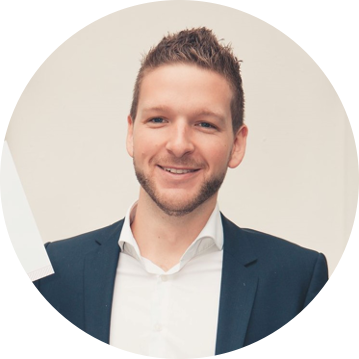
Jona developed expertise in scoping, structuring, and executing strategy projects during his time in industry (BCG, Accenture, & CPC) and as an independent consultant for EA-adjacent organisations (CEA, GovAI and FFP). He has held leadership roles in community building, including vice president of EA Austria, board member of EA Germany, and founder and strategic advisor of the EA Consulting Network (EACN). He quit his PhD in AI and decision-making in favour of a more counterfactually promising career path. Jona graduated from the University of Vienna with a master’s degree in psychology, where he worked for three years as a research assistant.

Max honed his strategy consulting skills during his time at BCG, where he also gathered experience in EA community building by co-organising the global EA workplace group. Before that, he explored research in AI governance and longtermism, supported by BERI, Forethought, and the Long-Term Future Fund. He graduated from the University of Oxford with a master’s degree in economics, where he wrote his thesis on implications of value drift for decision-making.
Max and Jona have a network[8] of:
Our sources of impact[9] are
1 - Influencing activities aimed at improving the world effectively by:
2 - Building a talent pipeline for the EA ecosystem by:
Our current hypothesis is that cFactual can maximise its impact by charging daily rates. This business model (1) provides direct feedback, (2) ensures that clients have “skin in the game” as a proxy for relevance, and (3) reduces our dependency on funders. Still, it could be that the most promising projects don’t have a client entity and/or that clients don’t have enough funding for us (especially after recent changes in the funding landscape). Hence, we are open to updating our business model to whatever realises our theory of change best.
Unlike typical consulting firms, we will be operating as a capped-for-profit. Profits will be reinvested into scaling cFactual as an organisation, donated, and/or used to subsidise a small number of projects for EA orgs that cannot afford standard rates[10].
We want to explore, optimise, and execute with you.
Exploring the right allocation of money and talent
We can help analyse the viability of a potential project or spending decision, or develop a multi-year organisational plan, including goals and prioritisation of activities.
Illustrative description
Rob Gledhill, Head of Groups at CEA:
“[...] Answering challenging empirical questions with Jona felt both high quality and minimal exertion on my part. [...]”
Optimising your theory of change (ToC) and KPIs
We can help formulate the ToC, spell out uncertainties and key assumptions, or set up a system to track progress with fast feedback loops.
Illustrative description
Sam Clarke, Strategy Manager at Centre for Governance of AI:
“cFactual produced a talent-related KPI faster and to a higher quality than I expected. I was delighted to find significant progress on important questions arriving in my inbox once a week. I appreciated the impact-driven working style”
Georg Arndt, Chief of Staff at Centre for Governance of AI:
"Jona gave good advice on what's feasible and how an impactful project on KPIs could look like. [...] The project is shaping up well [... and] I expect (~60%) GovAI to further engage with cFactual [...]. I'm very excited about the prospect of bringing the consulting model to EA without all the fluff and grandstanding. [...]
Executing a project on short notice
We can help with time-sensitive decisions, orchestrate urgent projects, or support large-scale fundraising.
Illustrative description
Karen Levy, Co-founder at Fit For Purpose and formerly Senior Director of Innovation at Evidence Action:
[...] In my opinion, many actors in the EA (and EA-adjacent) space would benefit from access to high-quality consultants who are already versed in effective altruist concepts and related skills. [...] I was impressed with Jona’s professionalism and his careful reasoning. He asked all the right questions about the goals of the project and the magnitude of its potential impact. [...]”
We are still exploring the ideal service portfolio and delivery model. Hence, we encourage you to connect, even - and especially - if you are unsure about cFactual being the right fit. We are looking forward to jointly figuring out if and how we can be helpful while being mindful of time.
We are also exploring other services, especially:
We are currently not working on deep technical or philosophical questions, like technical AI alignment or metaethics, but we will leverage insights from these areas as appropriate for our services. We are also not considering projects with a medium-to-long time horizon, like a 5-year build-up of a civilizational refuge or outsourcing of entire organisational functions.
Our primary goals for our first year are to:
Overall, there is considerable uncertainty regarding what we will be doing and how it compares to the opportunity costs of joining other high-impact projects. We plan to have tight feedback loops, including regular reflection meetings to red-team ourselves and update our models. We pre-commit to shutting down cFactual after 6 months if we think we are unlikely to break even over expected opportunity costs over two years.
We invite you to have a very low bar to get in touch with us (customer feedback is among the most important things for us at this early stage).
Thank you (in alphabetical order) to various people who directly and indirectly supported us along the journey: Anneke Pogarell, Ari Kagan, Callum Calvert, Eli Kaufman, Georg Arndt, Gidi Kadosh, James Snowden, Jeffrey Poche, Joan Gass, Joanna Ruan, Karen Levy, Konstantin Sietzy, Lennart Heim, Linchuan Zhang, Lisa Soder, Luke Muehlhauser, Max Daniel, Markus Anderljung, Merlin S., Michael Aird, Mike McCormick, Neil Ferro, Neerav Kingsland, Nick Fitz, Rob Gledhill, Sabrina K., Sam Clarke, Sam Hilton, Sarah Pomeranz, Simon Asbach, Zachary Robinson, among others.
Thank you Akhil Bansal, Callum Calvert, Devon Fritz, Joel Tan, Konstantin Pilz, Leonie Kößler, Lisa Soder, Marius Hobbhahn, Simon Grimm, and Vaidehi Agarwalla, for providing valuable feedback on this post.
An especially big thank you to Nils Voelker for being a motivational and executional force behind the scenes throughout the entire process.
We pretty much agree with the assessment of 80.000 Hours that direct work is probably more impactful, everything else equal
We think there is room for more agencies and are excited about friendly competition. Feel free to connect to discuss
We define a project as a limited time period with a set of activities aimed at previously agreed goals. This is the definition used in many professional services firms. By “executing … projects,” we do not mean “incubating organisations” or “starting organisations”.
We will not work on projects with long time horizons (>18 months), or deep technical or philosophical questions. We will apply insights from these areas in our services.
This can include former consultants transitioning to direct EA work or EAs getting trained in management.
cFactual will operate as a capped-for-profit organisation charging clients and donating or reinvesting profits, or reducing daily rates if appropriate.
The market research was conducted before the FTX crash. Hence, most of the insights on concrete needs might be outdated while still being reflected in our prioritised services.
In this context loosely defined as people we feel at least comfortable reaching out to ask for a significant favour, e.g., reviewing a document about our key uncertainties or making relevant introductions. We would expect these individuals to respond positively more often than not.
One of our key objectives in 2023 is refining our theory of change and doubling down on the most valuable activities.
Formalising the legal and governance model will become a priority once we reduced uncertainty.
It is not obvious to us which service to double down on, if any.
Exciting.! From an upskilling perspective, potentially interesting to understand what parts of your previous traditional consulting work have been most relevant for cFactual pilot projects and where you thought so but it was not actually the case.
Thanks for the question, Merlin. Please note that we have a small sample size and are still refining our models of what skillsets are most relevant for more EA-aligned consulting.
Three things that have been useful: 1) Structuring problems, projects and meetings well, 2) Being able to switch quickly between different levels of abstraction quickly and constantly: Thinking carefully about a key assumption in an excel model in one moment and thinking about how the results change the big picture for a CEO in the next moment 3) More vaguely: Just having seen and worked with a lot of organization, projects and leaders, probably shaped our intuitions
Three things that were less useful than I thought: 1) Executional speed - On the margin, we care much more about what we work on and getting it right compared to getting things done; 2) Qualitative data selection e.g., interviewing - during the pilot project we did a lot more independent thinking and then specific testing of key uncertainties with key stakeholders. In traditional consulting, we would have conducted interviews earlier to develop our hypotheses (which has the cost of becoming potentially an echo chamber); 3) Project planning - during all pilot projects we adapted our activities quite a lot based on our updated models, what would be most impactful