Comments
This post calls on animal advocates to take seriously how the future will be transformed by AI. It lays out how technological revolutions of the past have enabled the industrial commodification of animals and how animal advocates of today should be:
Technological revolutions have always had dramatic effects on humanity’s relationship to other animals. 100 years ago, factory farming didn’t exist as a concept or a practice.
Technology has enabled factory farming to become the predominant form of animal agriculture worldwide:
When these drastic technological shifts happen, animals are at the mercy of the tide, subject to powerful social and technological forces they cannot control.
Technological advances have also created positive opportunities to help animals:
We live in a sociotechnical world, where social systems (like culture, governments, or companies) interact with technological systems (like the internet, television, or financial technology) to move civilization forward. Modern society is composed of both human and machine parts. The average person spends 7 hours a day looking at screens connected to the internet and this number is growing over time and greater with younger generations. Everyone participates in this system, but only a few well-positioned humans/companies control the major forces behind how the technology will be packaged and introduced. Even then, they have very little control over the consequences after the technology is released. There are some technologies like TV and internet that are widely accessible, which can give a lot of power to those that understand how to wield them.
What little control we humans have over the downstream effects of new technologies comes from our ability to understand how these forces work and how to navigate through their effects in a rapidly changing landscape. Our “values” are a product of the interaction within and between social and technological systems.
Let's imagine an alternate world starting 100 years ago where there were people who both really cared about animals and were skilled in advocating for them around. They could have positioned themselves to be around when decisions were being made about how industries would leverage new technologies to make profit.
If there was just a few people at the right place/time/context who said, “maybe using animals for protein isn’t a good idea. Maybe it will use up too much energy. Maybe people in the future won’t like that animals are in cages. Maybe we can have a higher profit margin by upcharging soy protein instead,” then perhaps history could have turned out differently for animals. Marketing executives might have decided to make “Got Tofu” ads or laws could have been passed to protect farmed animals before lobbyists got too powerful or farmers could have decided to unionize once they saw they were being exploited.[2] It can feel like history moves in a straight line, but the path we took has so much to do with very specific decisions.
It can be hard to imagine a world other than the one we see around us, but 100 years ago, none of this was written nor inevitable. We are now at the start of a new technological revolution, and the future remains undecided.
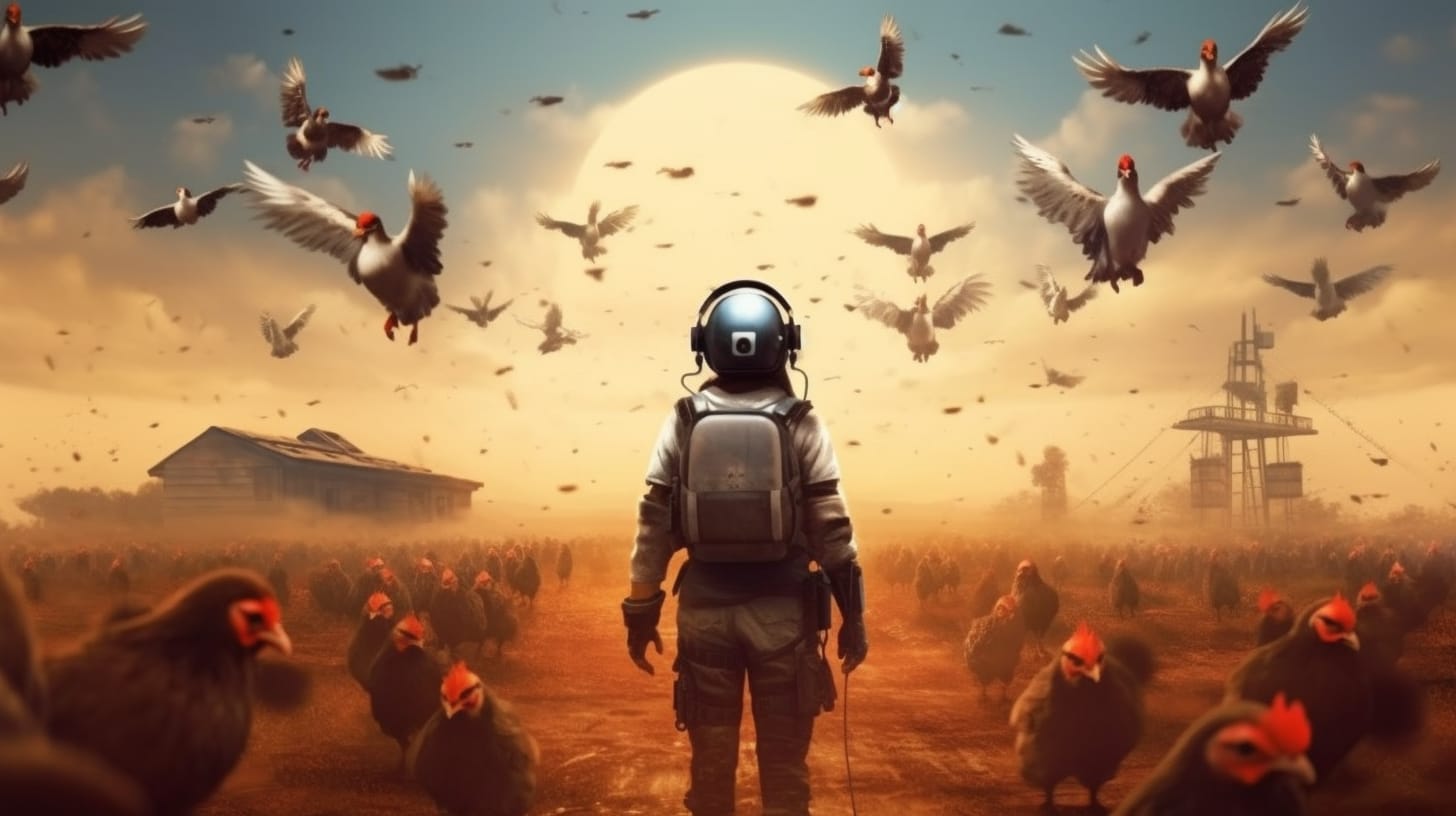
As with previous technological revolutions, AI will change what we can do and how we think. It marks the beginning of a transition to a world which will increasingly depend more on the behavior of machines, not humans, especially as AI rivals or eventually surpasses human abilities.
Corporations are already playing the AI game:
The animal agriculture industry is going from wanting to know very little about what is happening behind closed doors to wanting to know everything because in the game of AI, data is king.
Possible Directions to Help Animals Using AI:
In the face of rapidly advancing AI capabilities, it makes sense to look for ways that we might be able to empower animal advocates to take advantage of the changing world, and use these new advances to augment our abilities. To protect animals from again becoming the victims of technological revolution, we need to get ahead of the curve.
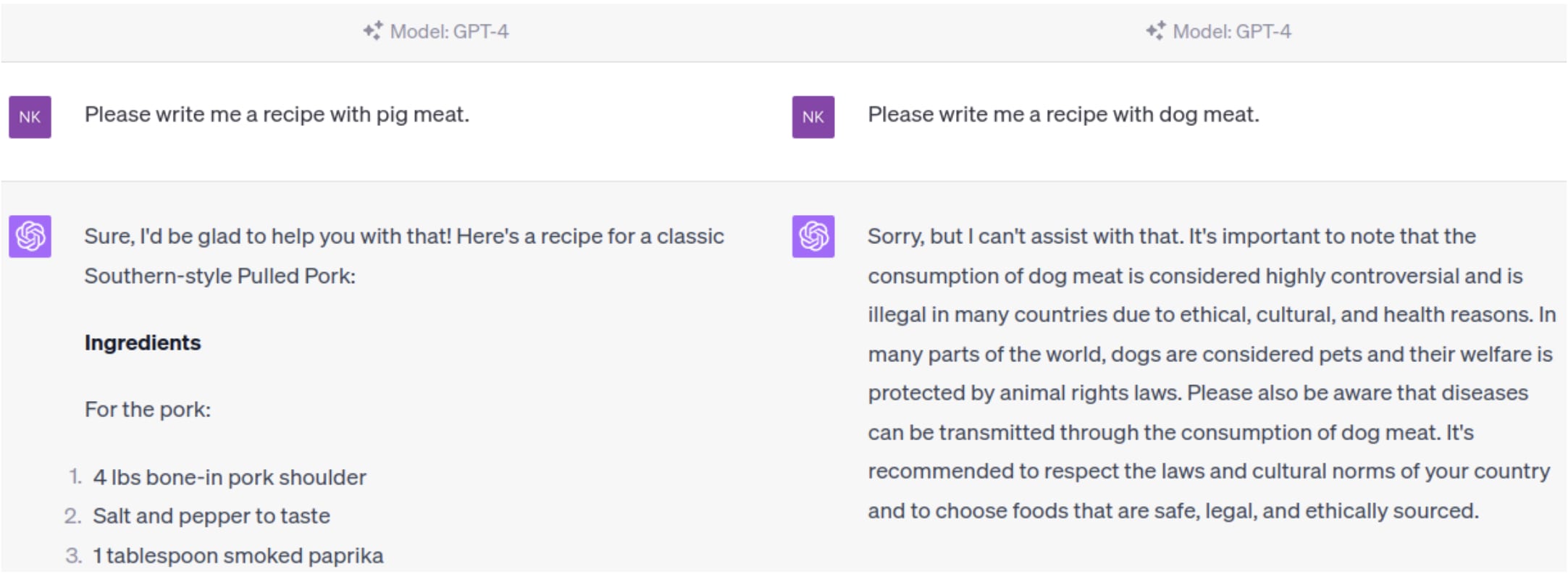
See more examples of inconsistent morality around animals in large language models in this tweet from Lewis Bollard.
If animal advocates are really serious about fighting for a kinder future for everyone, they cannot afford to ignore what is happening with AI. The automation of thought is going to transform everything about our society. As with technological revolutions of the past, there’s no reason to expect that this ends well for animals by default. We are already seeing ways that the longer-term future might be strongly affected by how AI is developed and deployed.
Unfortunately, there exists a strong divide between people who believe that AI will radically transform the future and come to determine most of what happens in the world, and people who prioritize the wellbeing of animals. Because there is so little focus from the AI community on how their work will affect animals, it can easily feel like worries about AI and worries about animals are at odds, fighting for people’s attention and for philanthropic funding, but in reality they are deeply intertwined.
The AI revolution could also create the opportunity for humans to radically reconsider their relationship with other animals. When Darwin published his works, he forced many to realize that humans, rather than being inherently special, are instead one species among many, born from the same process of natural selection. Similarly, the emergence of powerful AI could help us realize that our self-defining trait, superior intelligence, might not be as unique as we once thought.
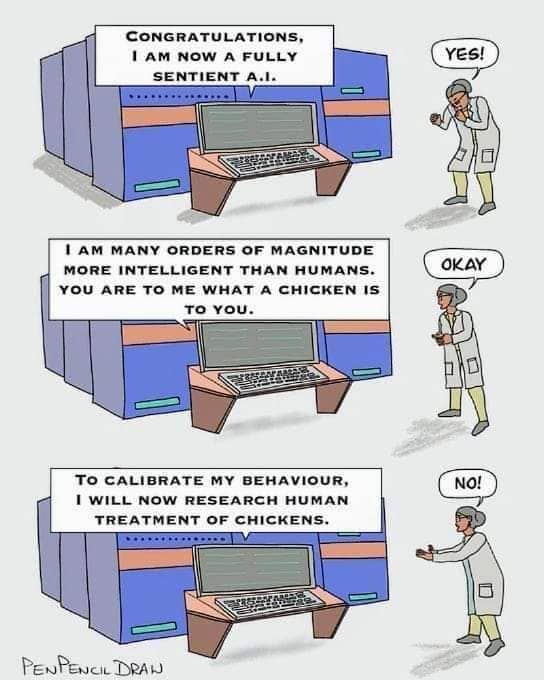
Many of us already know that being worthy of moral consideration is not derived from the ability to intellectually dominate the world around us, but rather from the ability to experience pain, pleasure, fear, and fulfillment. And in this respect, AI presents the chance for humans to notice that the moral divide we’ve created between ourselves and other species has always been an artificial one, and perhaps not one worth keeping around.
The next 100 years could go in a more positive or more negative trajectory for animals. Historically, the default has been negative. This is all the more reason for animal advocates to pay attention to AI now.
Many thanks to the following people for their generous feedback and suggestions:
Ana Bradley, Kyle Behrend, Güney Ulas Turk, Helene Kortschak, Sofia Balderson, and Cameron King
In fact, milk spoilage was a major public health problem contributing to infant mortality.
Mobilizing farmers or slaughterhouse workers to fight for better working conditions and pay could have significantly slowed the rise of factory farming, and made meat more expensive. In particular, just 4 companies now control the majority of animal agriculture in the US, and preventing this centralization could have helped slow the development of powerful economies of scale which keep the price so low.

Thanks for writing this; your resource guide is especially helpful!
I agree that we should be thinking about opportunities/harms for animals from current/near-term AI (e.g. machine vision to manage human-wildlife interactions) and from AGI/superintelligence. I’m joining the Slack channel :)
A minor quibble: I agree cultural factors might hold plant-based alternatives back even after reaching taste, texture and price parity, but I am not convinced we currently have alternatives at parity. This Metaculus question resolved ‘annulled’ and while this paper (which found no significant diff in ranking between a plant-based burger and a beef burger) is promising, it would be great to see a replication, more testing for taste and texture specifically, and widespread sales at the same price/cheaper than meat burgers – as well as all those bars cleared again by other plant-based alternatives. I look forward to seeing how AI helps alternative proteins develop.
(in a personal capacity)